Do Weight-Loss Peptides Cause Hair Loss?
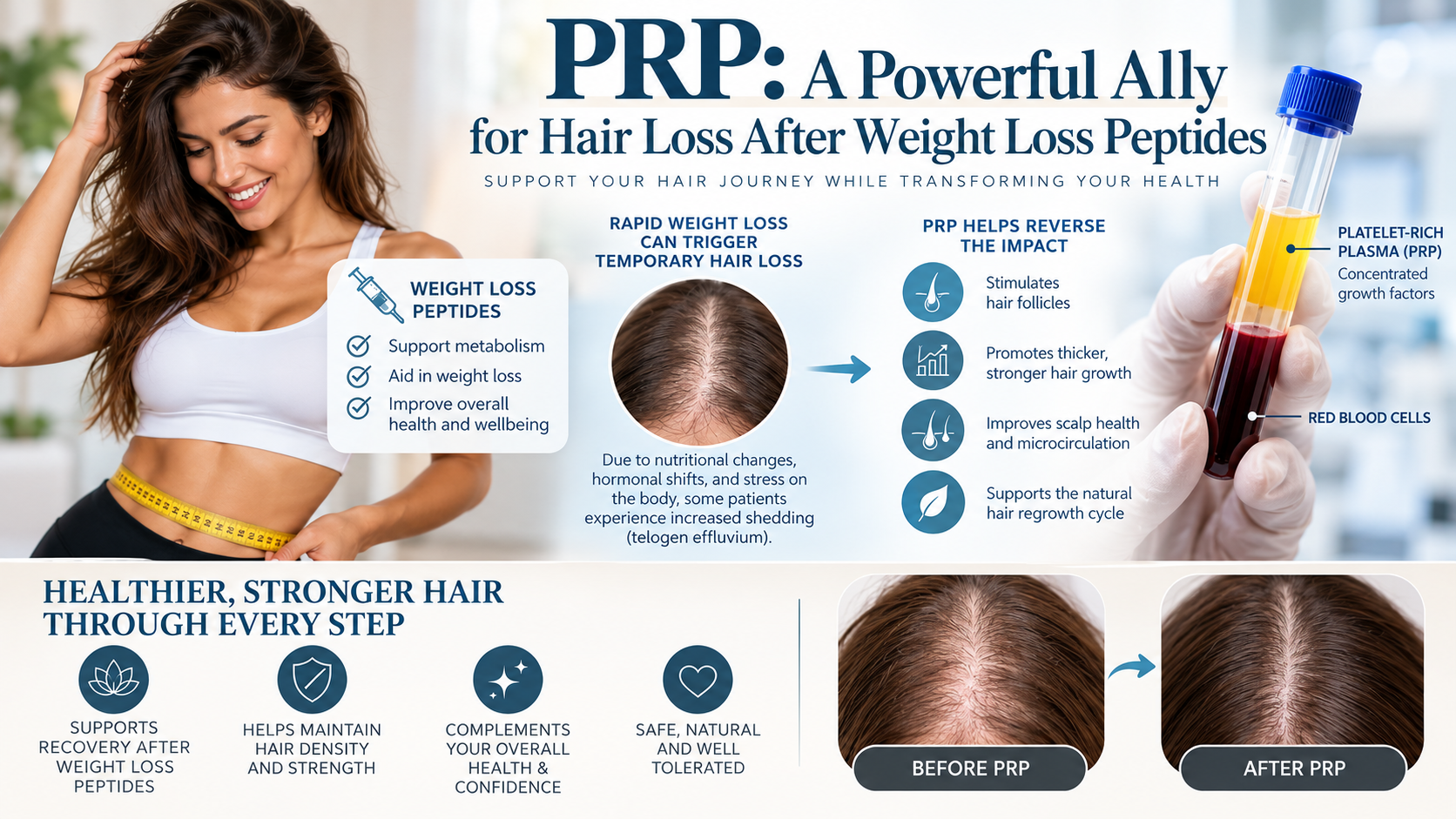
Weight-loss medications such as semaglutide and tirzepatide have transformed the management of obesity and metabolic disease.
Semaglutide, Tirzepatide and Hair Shedding: What You Need to Know
Weight-loss medications such as semaglutide and tirzepatide have transformed the management of obesity and metabolic disease. However, as their use has increased, so have reports of hair shedding and reduced hair density.
So, do these medications actually cause hair loss?
The answer is more nuanced than a simple yes or no.
Is Hair Loss Associated With Semaglutide and Tirzepatide?
Clinical trials and more recent studies have identified an association between treatment with GLP-1–based weight-loss medications and increased hair shedding.
Hair loss has been reported with both semaglutide and tirzepatide, with some studies showing a stronger signal with tirzepatide.
Importantly, however, there is currently no convincing evidence that these medications directly damage or destroy the hair follicle.
Instead, much of the hair shedding appears to be related to the physiological changes accompanying significant or rapid weight loss.
Why Can Rapid Weight Loss Cause Hair Shedding?
One of the most likely explanations is a condition called telogen effluvium (TE).
Telogen effluvium occurs when physical or metabolic stress causes an unusually large number of hair follicles to leave their active growth phase and enter the resting phase.
Several weeks to months later, these hairs begin to shed.
During treatment with weight-loss medications, potential triggers include:
- Rapid or substantial weight loss
- Significant calorie restriction
- Reduced protein intake
- Iron or ferritin deficiency
- Vitamin and micronutrient deficiencies
- Thyroid abnormalities
- Physiological stress associated with major changes in body weight
The good news is that telogen effluvium is usually temporary. Once the underlying trigger has been identified and corrected, follicles can re-enter the growth phase and hair density can gradually recover.
Telogen Effluvium or Androgenetic Alopecia?
This distinction is extremely important.
A patient experiencing sudden shedding while taking semaglutide or tirzepatide may have pure telogen effluvium, but rapid shedding can also reveal previously mild or unnoticed androgenetic alopecia (pattern hair loss).
In some patients, both conditions occur simultaneously.
This is where trichoscopy can be particularly valuable.
In telogen effluvium, the remaining hairs generally maintain a relatively uniform shaft diameter and significant follicular miniaturisation is absent.
In androgenetic alopecia, trichoscopy typically reveals hair-shaft diameter variability, progressively miniaturised hairs, vellus-like hairs and an increasing number of single-hair follicular units, particularly in androgen-sensitive areas.
Correct diagnosis matters because the treatment strategy is different.
What Should Be Checked?
When significant shedding develops during weight-loss treatment, assessment should focus on identifying possible triggers rather than immediately starting multiple hair-growth treatments.
Depending on the patient's history and clinical findings, investigation may include:
- Full blood count
- Ferritin and iron studies
- Thyroid function
- Vitamin D
- Vitamin B12 and folate
- Zinc when clinically indicated
- Dietary and protein intake
- Rate and magnitude of recent weight loss
Clinical examination, standardized photography and trichoscopy can then help determine whether the patient has telogen effluvium, androgenetic alopecia, or a combination of both.
Can PRP Help?
Platelet-Rich Plasma (PRP) has considerably more clinical evidence for androgenetic alopecia than for pure acute telogen effluvium.
PRP contains platelet-derived growth factors that may support dermal papilla activity, follicular signalling, vascularisation and maintenance of the active growth phase of the hair cycle.
For a patient with telogen effluvium combined with underlying androgenetic alopecia, PRP may therefore represent a useful adjunct to treatment.
For uncomplicated acute telogen effluvium, however, identifying and correcting the underlying trigger remains the priority.
What About Injectable Peptides?
Injectable peptide and mesotherapy formulations are increasingly promoted for hair restoration.
Some contain combinations of biomimetic peptides, amino acids, vitamins, minerals and other compounds intended to support follicular activity.
Although the biological rationale is interesting, clinical evidence specifically demonstrating that injectable peptide treatments accelerate recovery from telogen effluvium remains limited.
They should therefore be considered adjunctive treatments rather than replacements for identifying and correcting the cause of shedding.
Do Exosomes Help?
Exosome-based treatments are another emerging area of regenerative hair medicine.
Early research suggests that exosomes may influence signalling pathways involved in dermal papilla activity, angiogenesis and the transition of follicles into the active growth phase.
However, the clinical evidence remains preliminary, treatment preparations are not yet well standardized, and most available research relates to hair regeneration and androgenetic alopecia rather than acute telogen effluvium.
Exosome treatment should therefore still be regarded as an emerging or experimental approach, rather than an established first-line treatment for telogen effluvium.
What Is the Best Approach?
For patients experiencing hair loss while using semaglutide, tirzepatide or other weight-loss treatments, the most important step is establishing why the hair is shedding.
Treatment should be individualized according to whether the patient has:
Acute Telogen Effluvium
Identify and correct the trigger, optimize nutrition and protein intake, correct documented deficiencies and monitor recovery.
Androgenetic Alopecia
Treat the underlying pattern hair loss using evidence-based medical and regenerative treatments where appropriate.
Telogen Effluvium + Androgenetic Alopecia
Address the cause of excessive shedding while simultaneously treating the underlying follicular miniaturisation.
The Take-Home Message
Semaglutide and tirzepatide are associated with increased hair shedding in some patients, but current evidence does not establish that they directly damage hair follicles.
In many cases, the pattern is compatible with telogen effluvium triggered by rapid weight loss, reduced nutritional intake or associated metabolic changes.
Most importantly, sudden hair shedding does not necessarily mean permanent hair loss.
A detailed medical history, nutritional assessment and trichoscopic examination can distinguish temporary shedding from underlying follicular miniaturisation and allow treatment to be targeted appropriately.